Laser Therapy
Gentle, non-invasive photobiomodulation that reduces pain, decreases inflammation, and supports tissue healing — sessions are calm, and most pets relax during treatment.
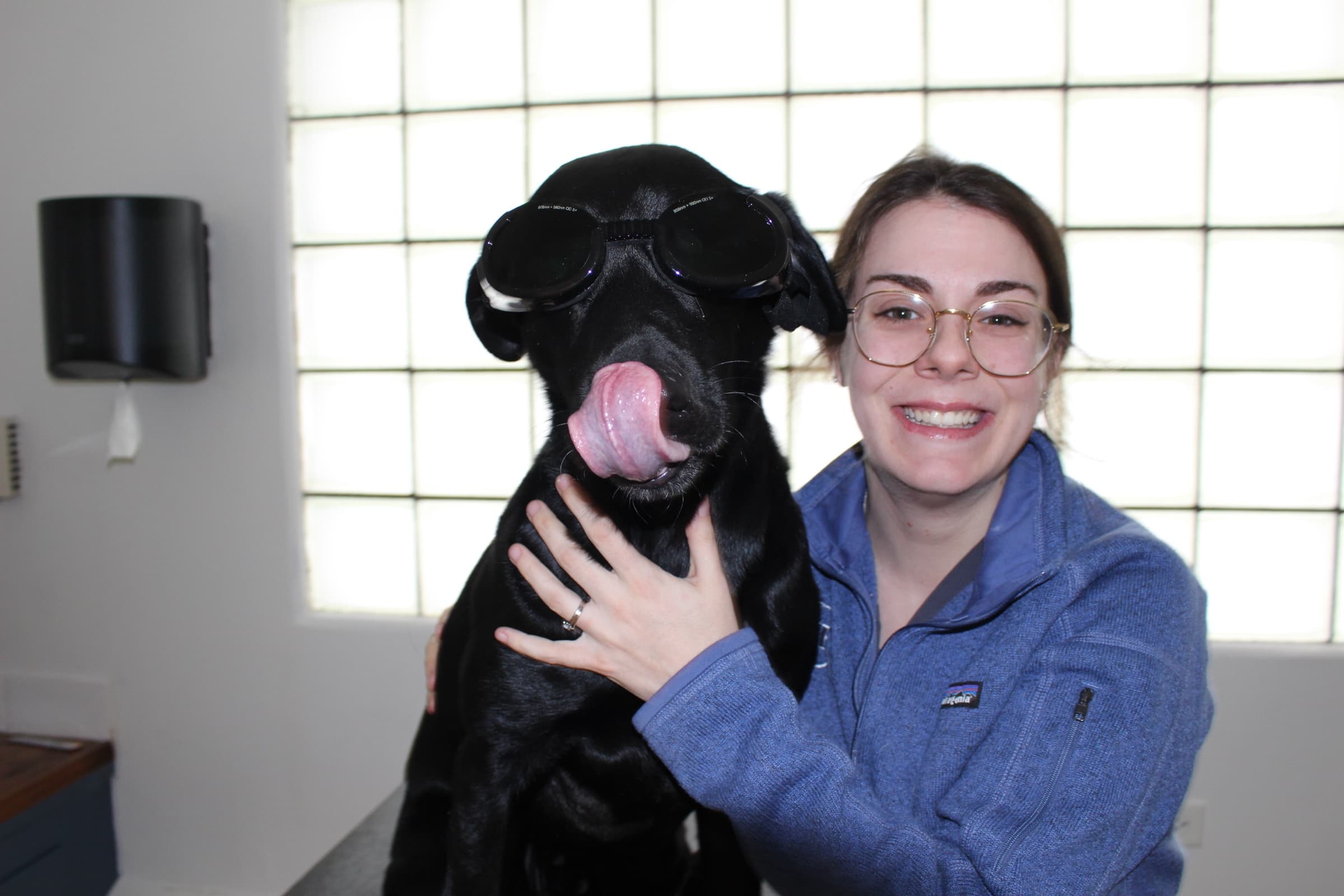
Laser therapy—also called photobiomodulation—is a gentle, non-invasive treatment we use to help reduce pain, decrease inflammation, and support tissue healing. Sessions are calm and comfortable, and most pets relax during treatment.
How Laser Therapy Works
Our therapeutic laser delivers specific wavelengths of light to targeted tissues. That light energy is absorbed by cells and helps “turn up” normal healing processes, including:
- Improved cellular energy production (supports repair)
- Reduced inflammatory signaling (helps swelling and soreness)
- Better local circulation and oxygen delivery
- Pain modulation (many pets feel relief quickly)
Because PBMT supports the body’s own recovery pathways, it’s commonly used alongside medications, rehabilitation, or post-operative care—and in some cases may help reduce reliance on higher medication doses (depending on the condition and the patient).
Conditions We Commonly Treat with Laser Therapy
Laser therapy can be helpful for many dogs and cats, including:
- Osteoarthritis and chronic joint pain
- Back pain and some soft tissue injuries
- Decreasing discomfort and inflammation after surgery
- Targeting painful gingivitis during dental procedures
- Supporting wound healing after infections
What a Session Looks Like
- Your pet gets settled comfortably (most stay on a cozy mat or bed)
- We apply the laser over the targeted area(s)
- Treatments typically take 5–15 minutes
- No shaving, no sedation, no downtime—your pet can return to normal activity afterward (unless otherwise instructed for orthopedic or post-op restrictions)
- Often combined with acupuncture when appropriate
Many conditions do best with a series of treatments (for example, 2–3 times weekly at first, then tapering to 2-4 week maintenance as needed).
Is Laser Therapy Safe?
When performed with proper training and eye protection, PBMT is considered very safe. We tailor settings to your pet’s size, coat, condition, and comfort. We’ll also review whether laser therapy is appropriate if your pet has certain conditions (for example, some tumors or sensitive areas may require avoidance or special caution).
Why Class IV Veterinary Lasers Are Different
Not all laser therapy is the same. The Class IV medical laser we use in a veterinary setting is fundamentally different from over-the-counter devices or products offered without a veterinary degree or medical oversight.
Class IV veterinary lasers
- Operate at much higher power outputs
- Deliver therapeutic energy deep into muscle, joints, ligaments, and bone
- Designed to reach tissues affected by arthritis, post-operative inflammation, and chronic pain
- Based on precision dosing that will change based on the patient’s hair coat, body condition and size
Over-the-counter or non-medical devices
- Are usually low-level (Class I–III) or LED-based
- Limited to very superficial tissue effects
- Often cannot deliver enough energy to impact joints or deep inflammation
Think of this difference as the contrast between a heating pad vs. targeted physical therapy equipment—both may feel warm, but only one reaches the problem tissue.
Related services
Acupuncture
Evidence-based veterinary acupuncture (EVBA)
Evidence-based veterinary acupuncture rooted in modern anatomy, neurophysiology, and clinical research — used alongside diagnostics, medications, and rehabilitation to manage pain and support healing.
Learn moreShockwave Therapy
The only practice in the area offering shockwave therapy
The only practice in the area offering extracorporeal shockwave therapy — targeted sound waves that stimulate healing and reduce pain in tendons, ligaments, joints, and bone.
Learn more